This framed textile is an exquisite Victorian-era crazy quilt block that showcases the peak of 19th-century American decorative needlework.
Authentic Dated 1884
Visual and Material Breakdown
Composition: The piece is an asymmetrical, improvisational arrangement of irregular fabric patches—characteristic of the Gilded Age "crazy patchwork" phenomenon. The muted earthy greens, rich browns, and textured neutrals suggest a sophisticated mix of period dress silks, velvets, or wool blends.
Needlework & Embellishments: Every patch is meticulously joined using a variety of decorative hand-embroidery techniques. Notable stitches include bold, cream-colored herringbone cross-stitches along the seam lines and intricate starburst or feather framing.
Artistic Motifs: The central panels feature delicate, three-dimensional hand-embroidered floral sprays. White daisy-like blossoms and fine green stems are stitched directly onto the fabric, reflecting the nature-inspired Japanese aesthetics that heavily influenced Victorian decorative arts at the time.
Historical Significance & The Ribbon
The crowning feature of this textile is the commemorative silk ribbon sewn horizontally across the lower third, bearing the inscription "Chicago 1884" alongside the tracking or entry number "No. 366."
During the 1880s, crazy quilts transformed from a casual domestic hobby into highly competitive national exhibitions. Communities, regional state fairs, and major expositions held specialized shows where textiles were rigorously judged on their complexity, stitch variety, and unique materials.
This specific printed silk premium acts as a pristine historical marker. It dates the piece precisely to 1884—the exact year the crazy quilting craze reached its absolute absolute zenith across America. The inclusion of a formal location and catalog number strongly suggests this block was entered into or awarded at a major municipal exposition or competitive textile fair in Chicago, cementing its status as a documented, museum-quality piece of American folk art.
This framed textile is an exquisite Victorian-era crazy quilt block that showcases the peak of 19th-century American decorative needlework.
Authentic Dated 1884
Visual and Material Breakdown
Composition: The piece is an asymmetrical, improvisational arrangement of irregular fabric patches—characteristic of the Gilded Age "crazy patchwork" phenomenon. The muted earthy greens, rich browns, and textured neutrals suggest a sophisticated mix of period dress silks, velvets, or wool blends.
Needlework & Embellishments: Every patch is meticulously joined using a variety of decorative hand-embroidery techniques. Notable stitches include bold, cream-colored herringbone cross-stitches along the seam lines and intricate starburst or feather framing.
Artistic Motifs: The central panels feature delicate, three-dimensional hand-embroidered floral sprays. White daisy-like blossoms and fine green stems are stitched directly onto the fabric, reflecting the nature-inspired Japanese aesthetics that heavily influenced Victorian decorative arts at the time.
Historical Significance & The Ribbon
The crowning feature of this textile is the commemorative silk ribbon sewn horizontally across the lower third, bearing the inscription "Chicago 1884" alongside the tracking or entry number "No. 366."
During the 1880s, crazy quilts transformed from a casual domestic hobby into highly competitive national exhibitions. Communities, regional state fairs, and major expositions held specialized shows where textiles were rigorously judged on their complexity, stitch variety, and unique materials.
This specific printed silk premium acts as a pristine historical marker. It dates the piece precisely to 1884—the exact year the crazy quilting craze reached its absolute absolute zenith across America. The inclusion of a formal location and catalog number strongly suggests this block was entered into or awarded at a major municipal exposition or competitive textile fair in Chicago, cementing its status as a documented, museum-quality piece of American folk art.


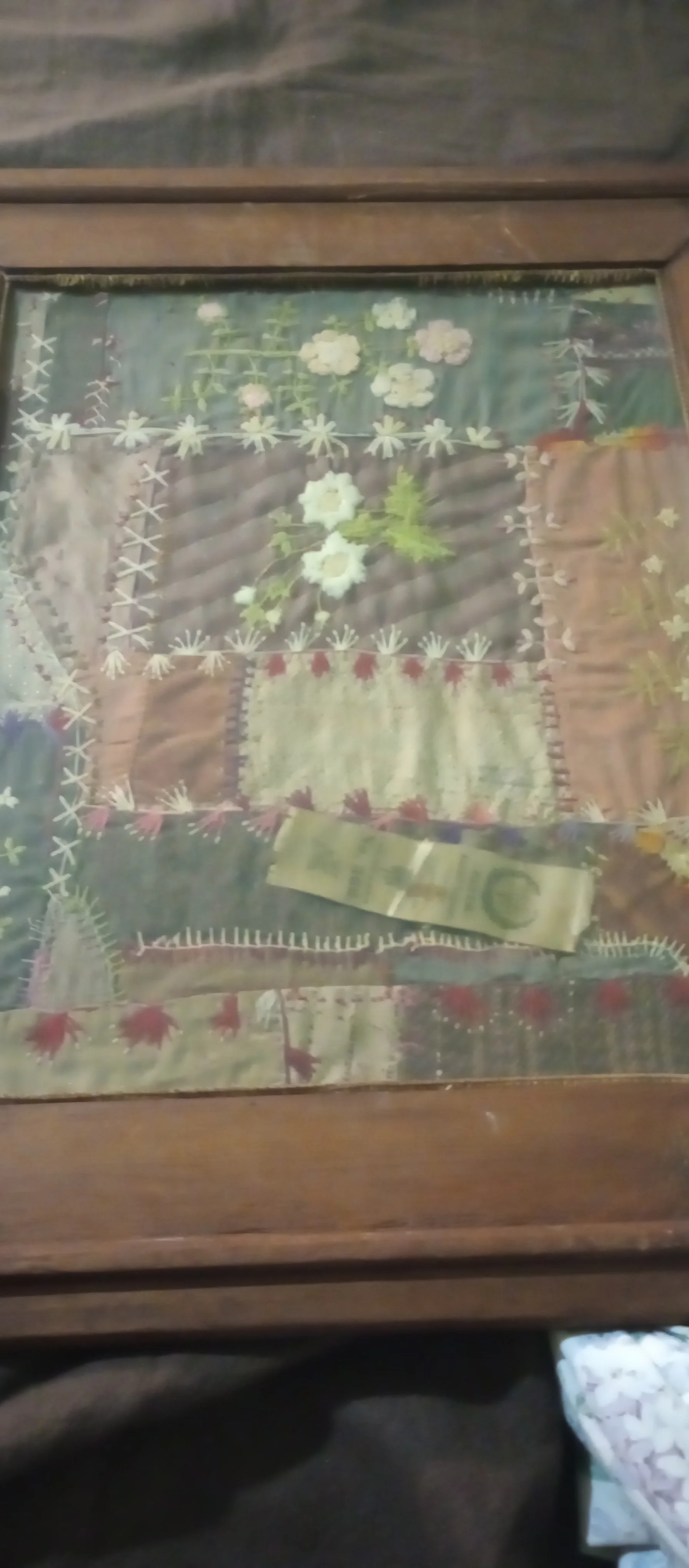 Image 1 of 17
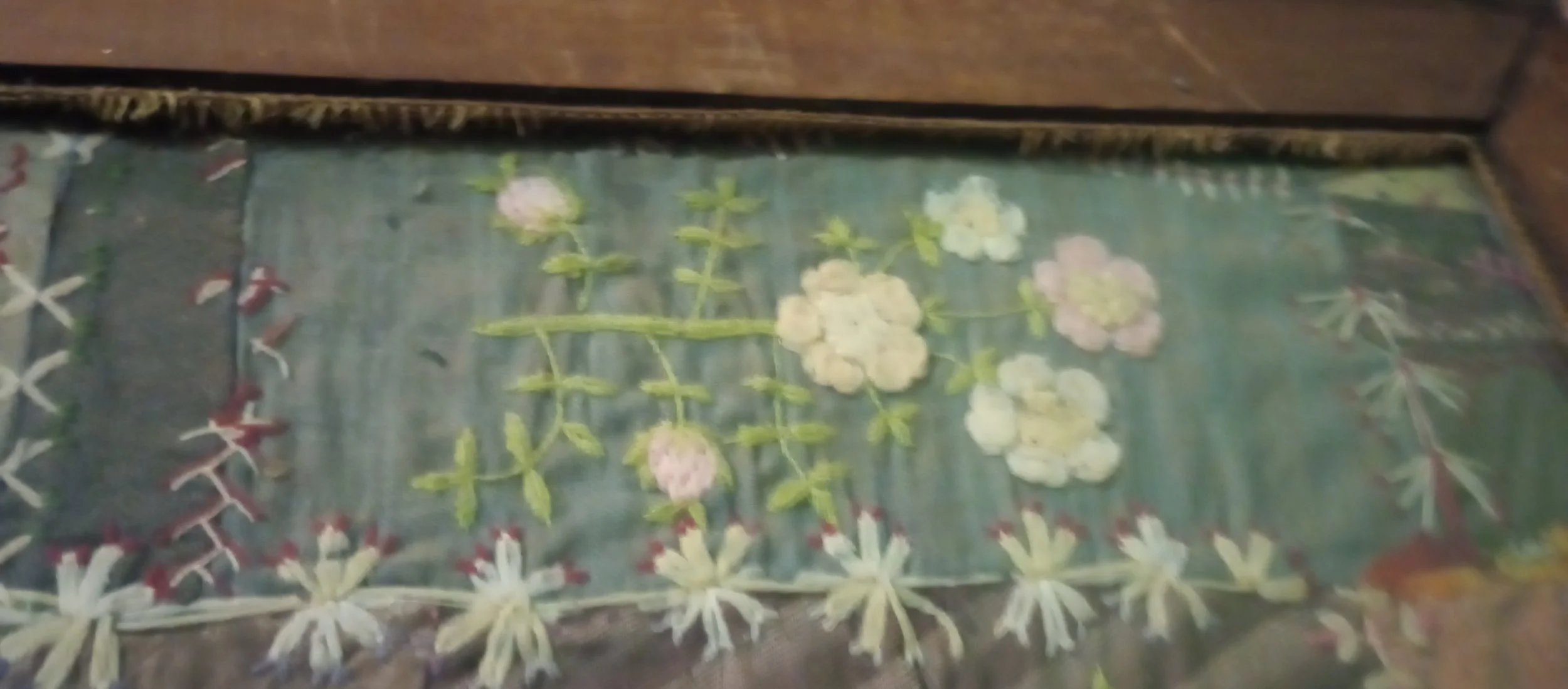 Image 2 of 17
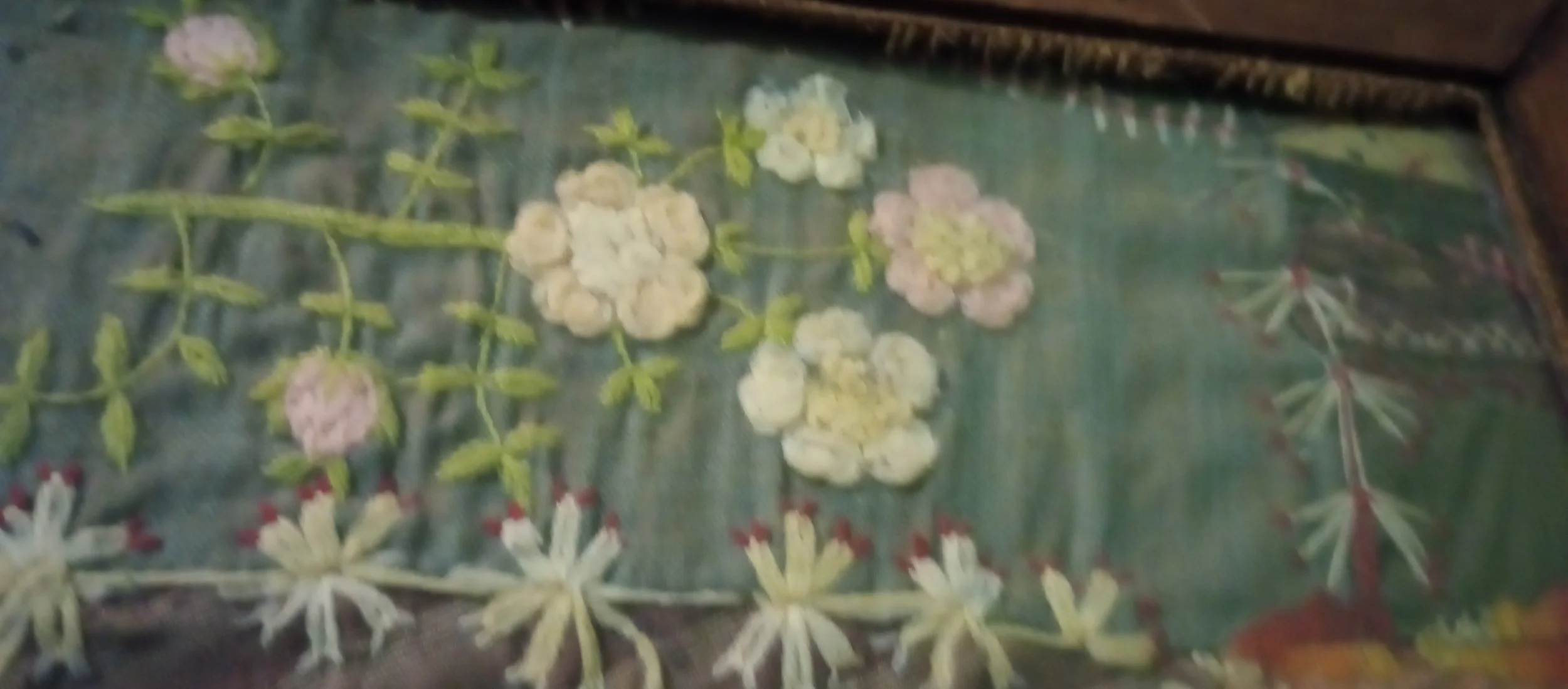 Image 3 of 17
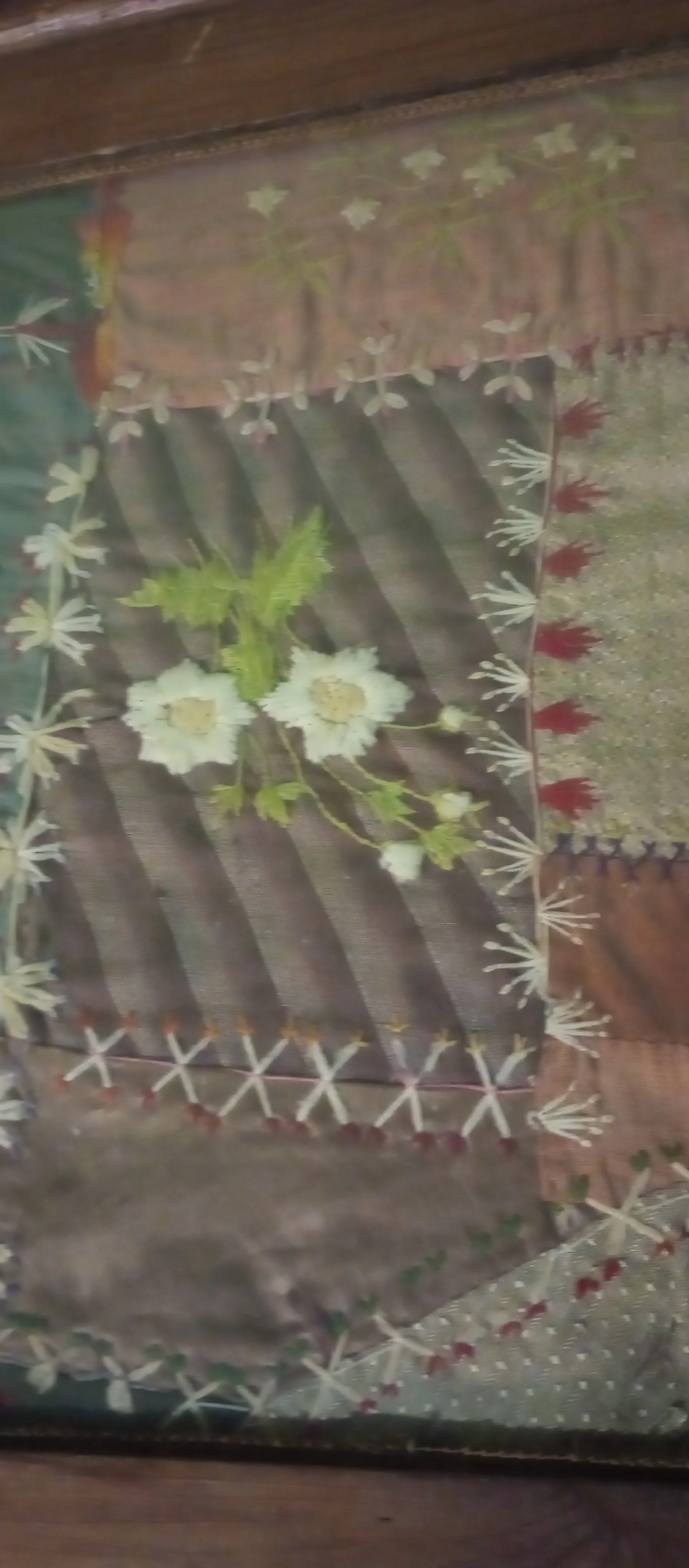 Image 4 of 17
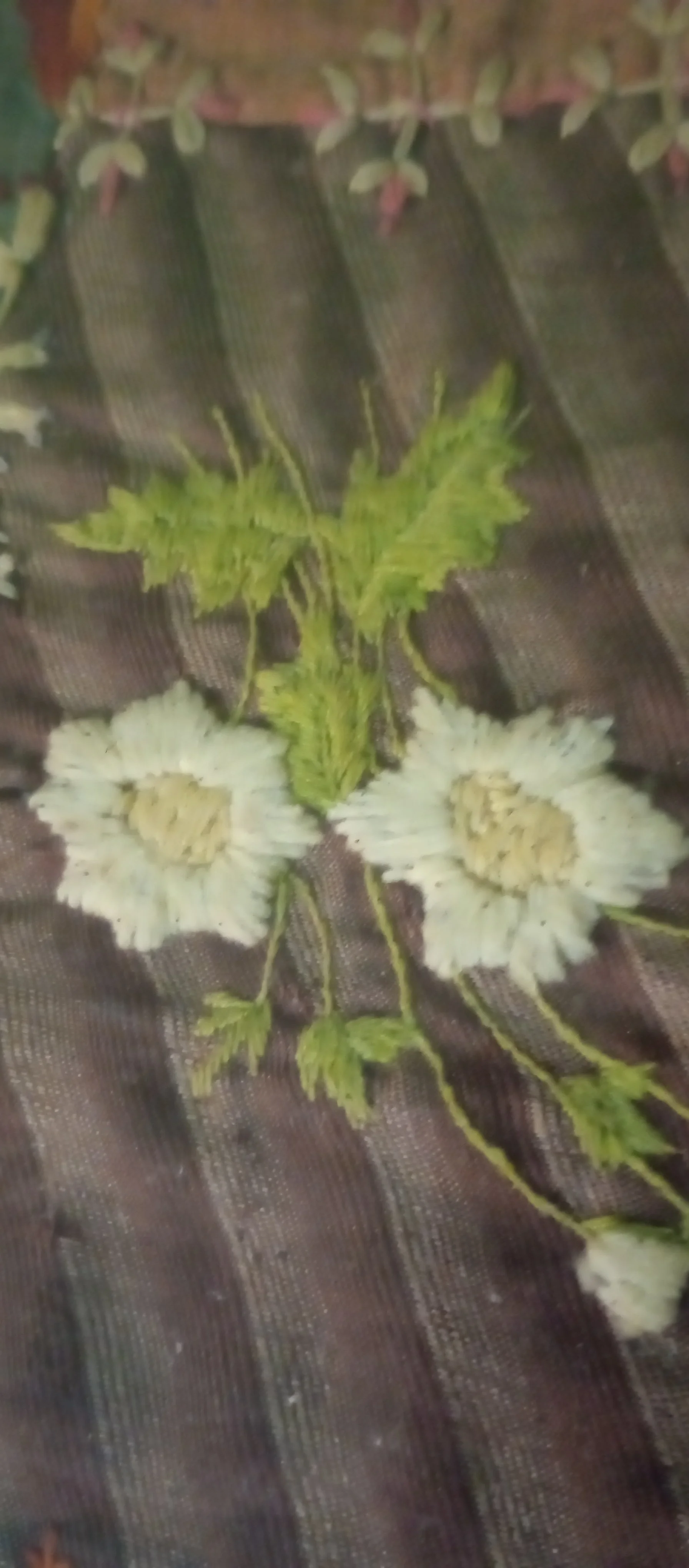 Image 5 of 17
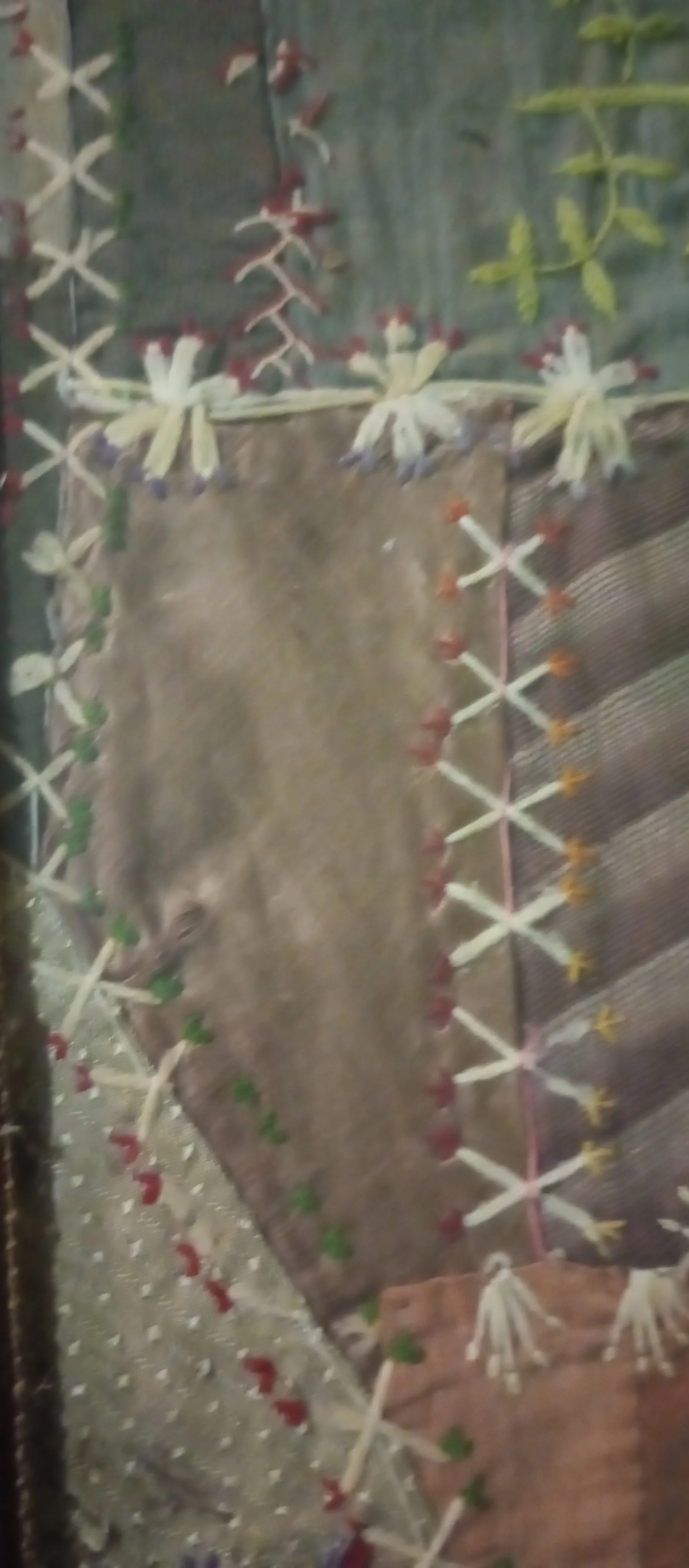 Image 6 of 17
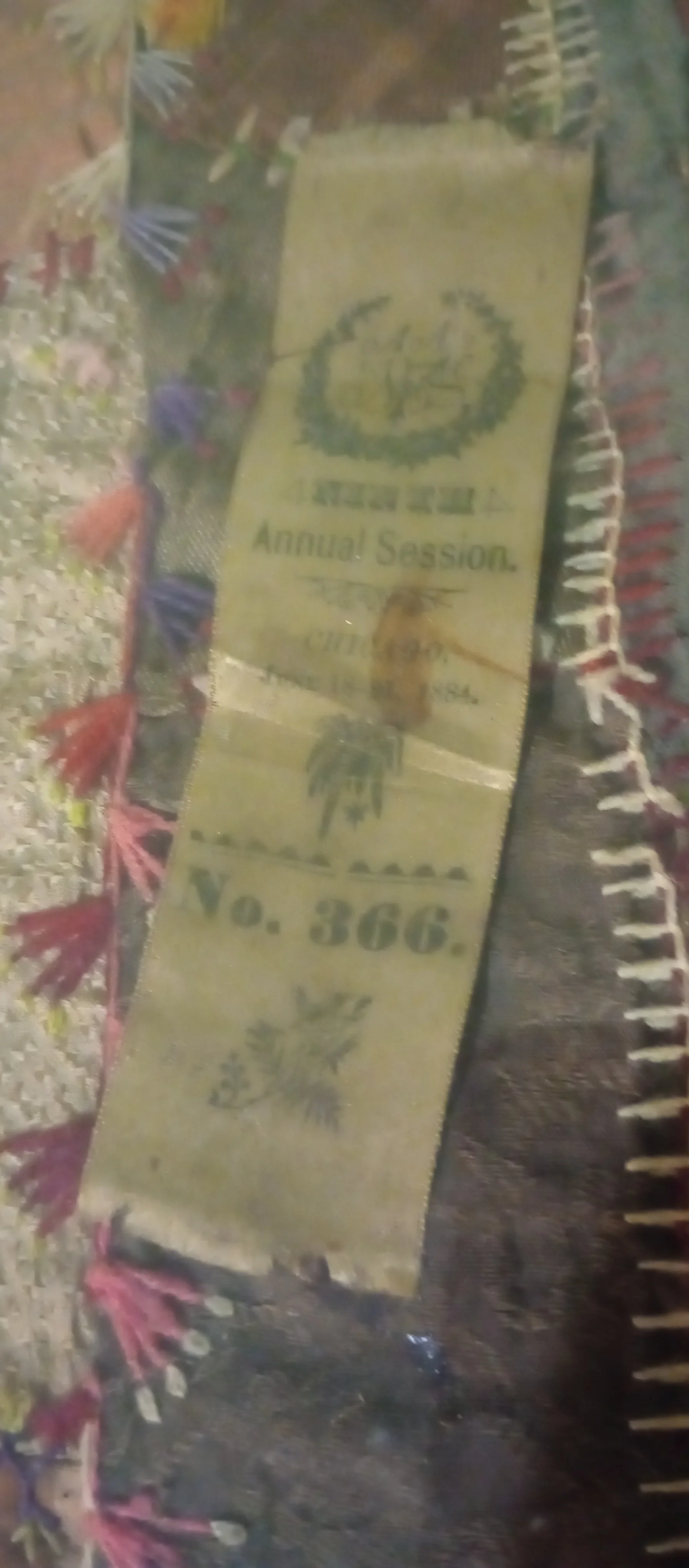 Image 7 of 17
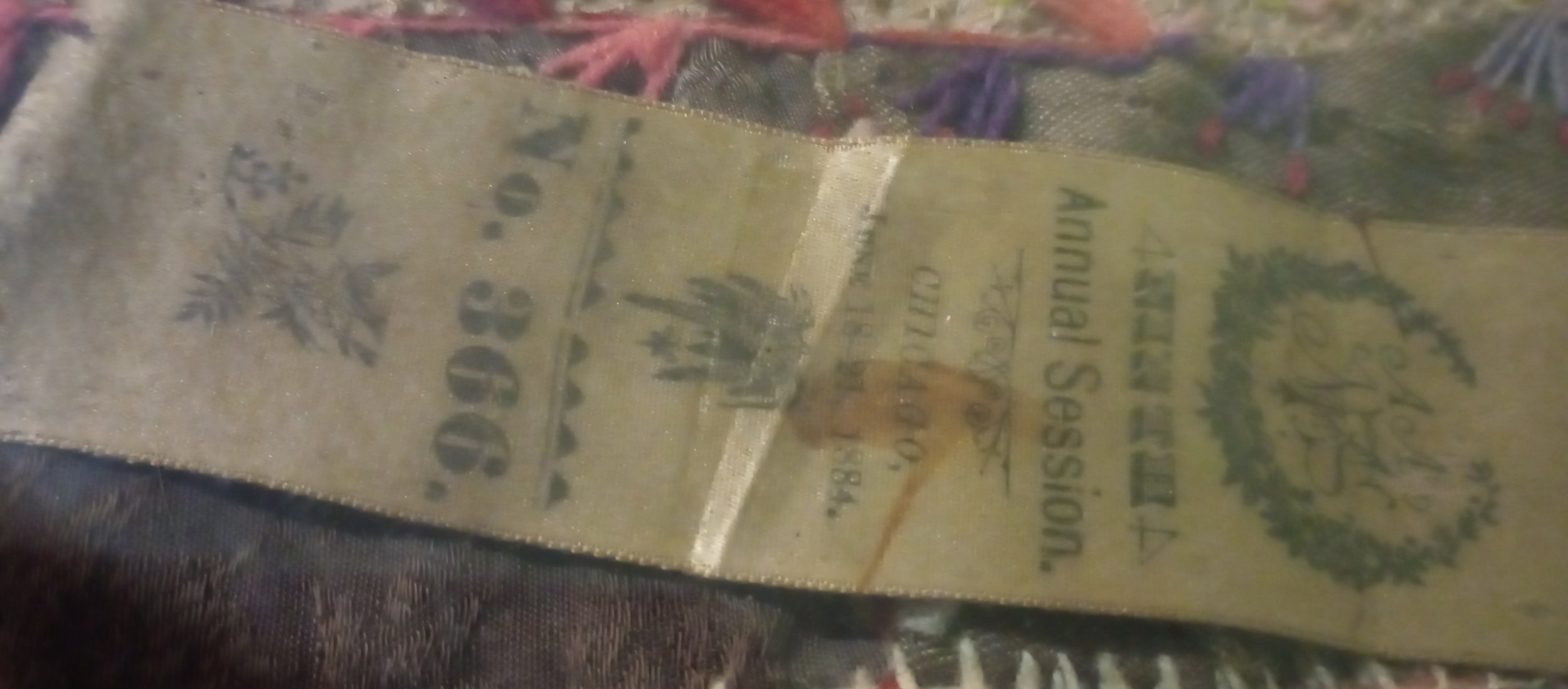 Image 8 of 17
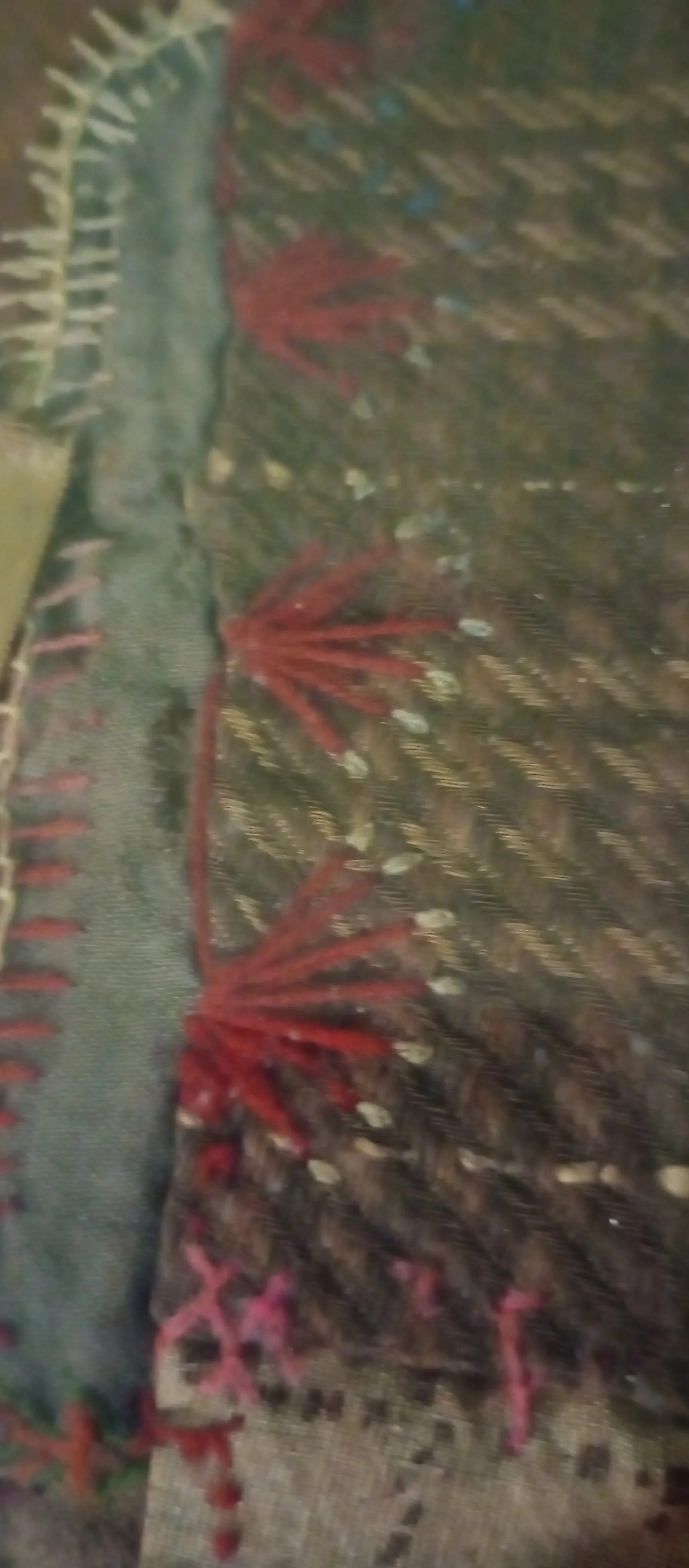 Image 9 of 17
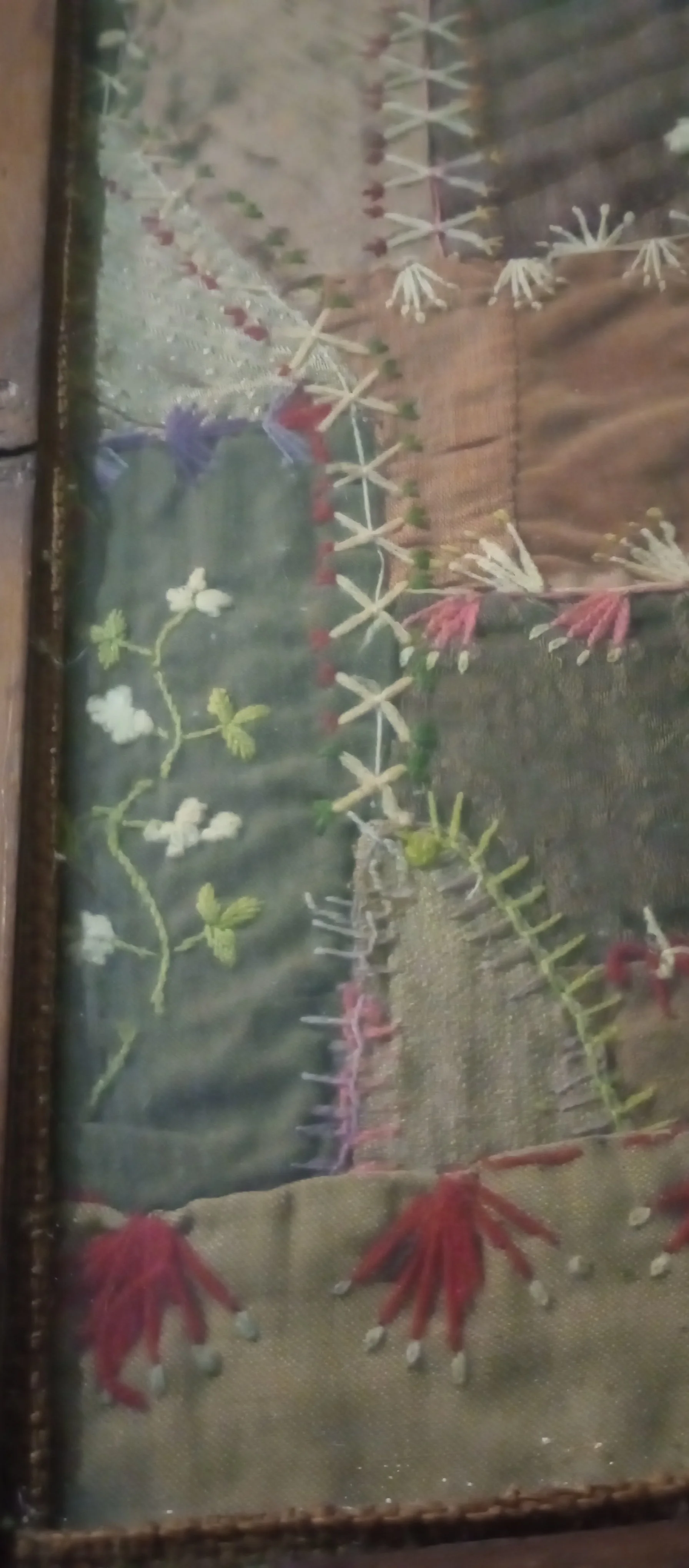 Image 10 of 17
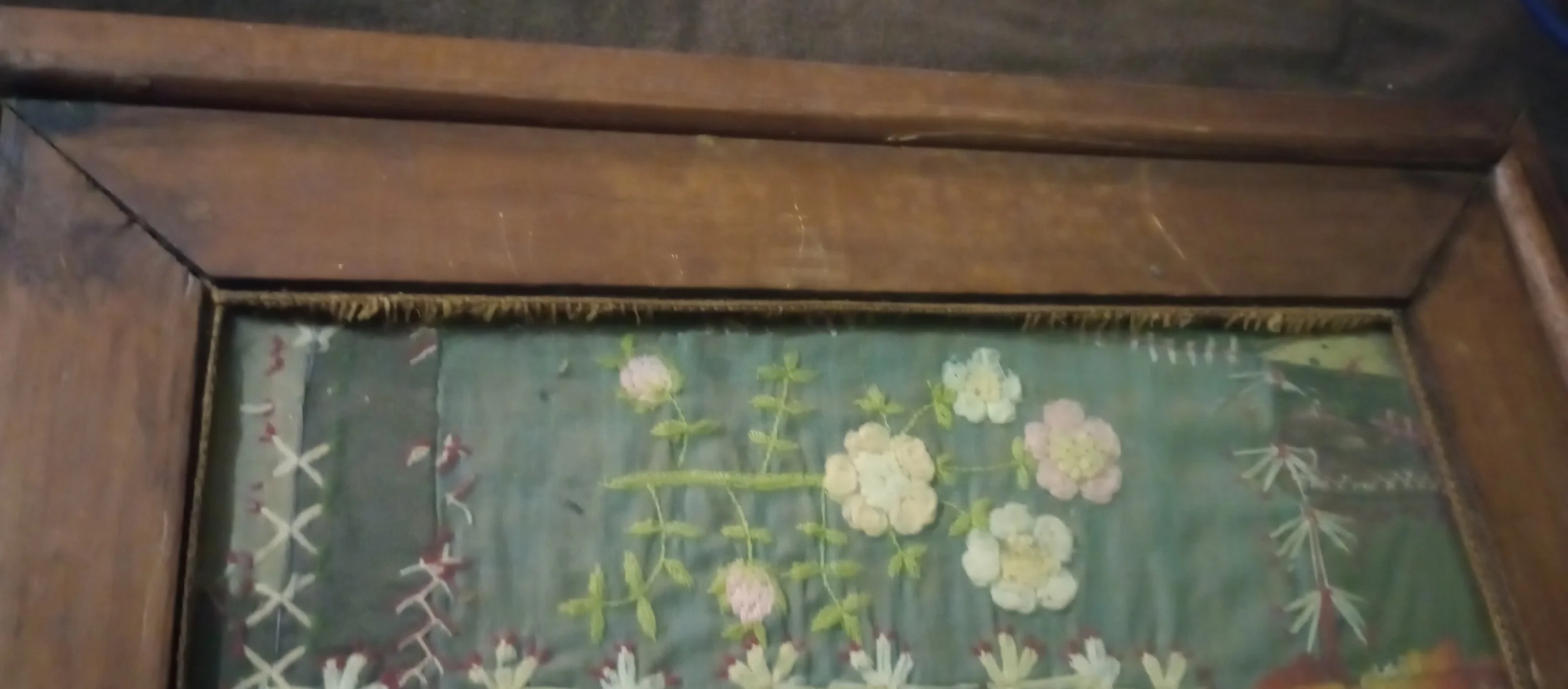 Image 11 of 17
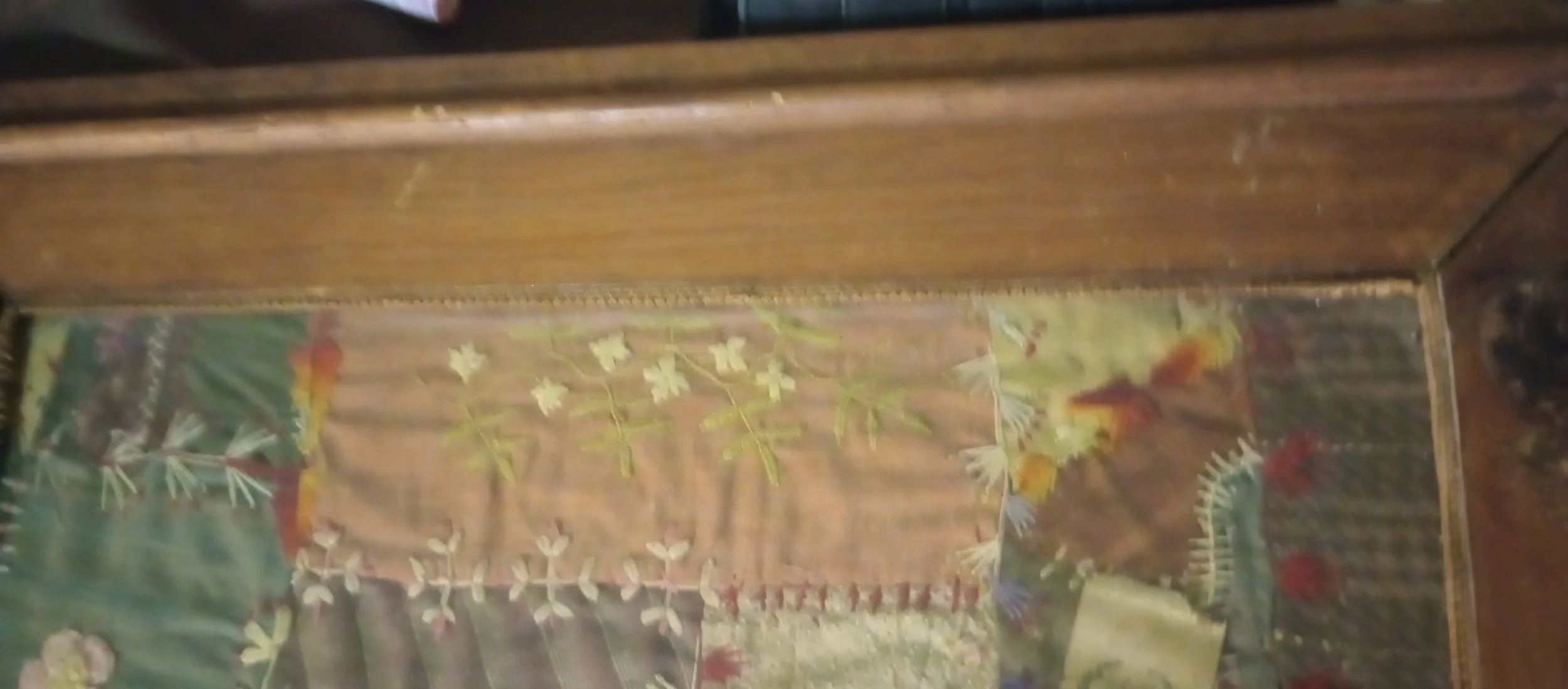 Image 12 of 17
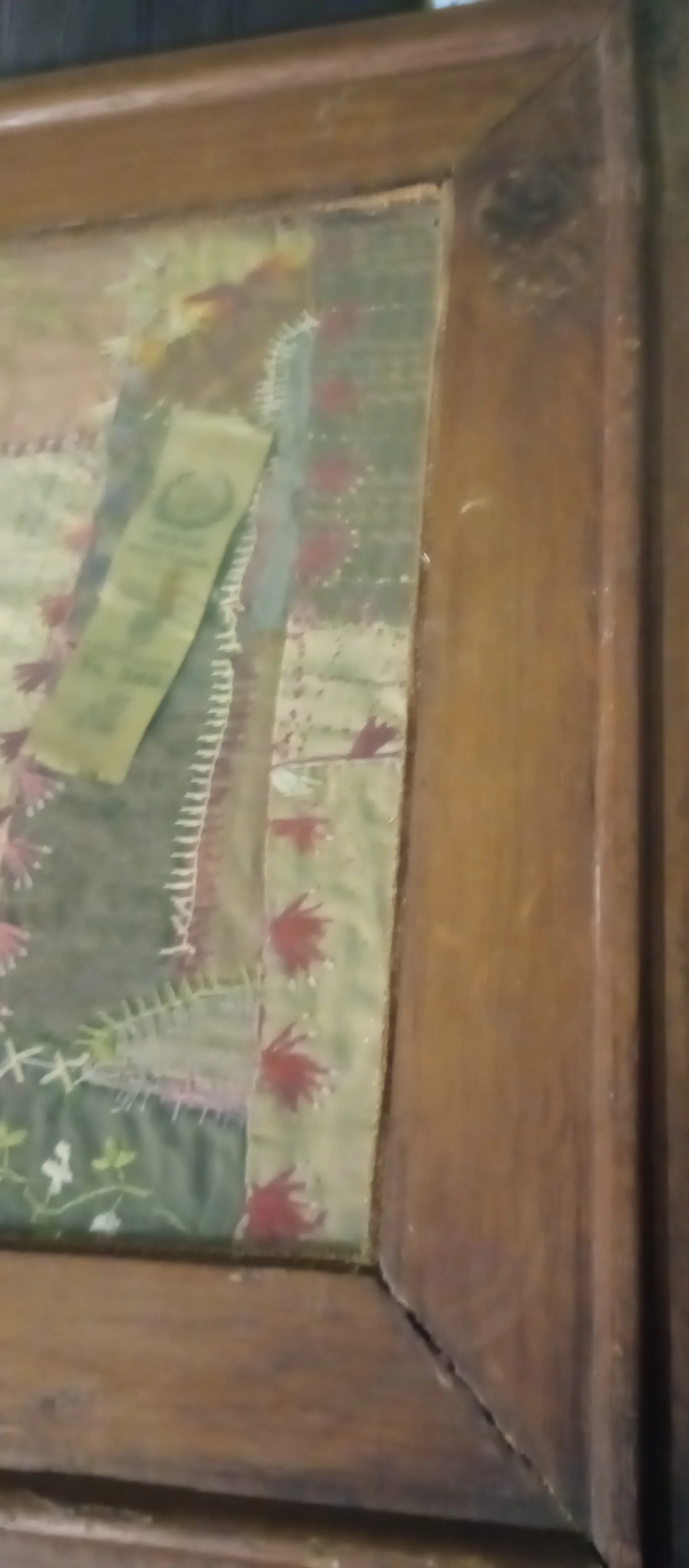 Image 13 of 17
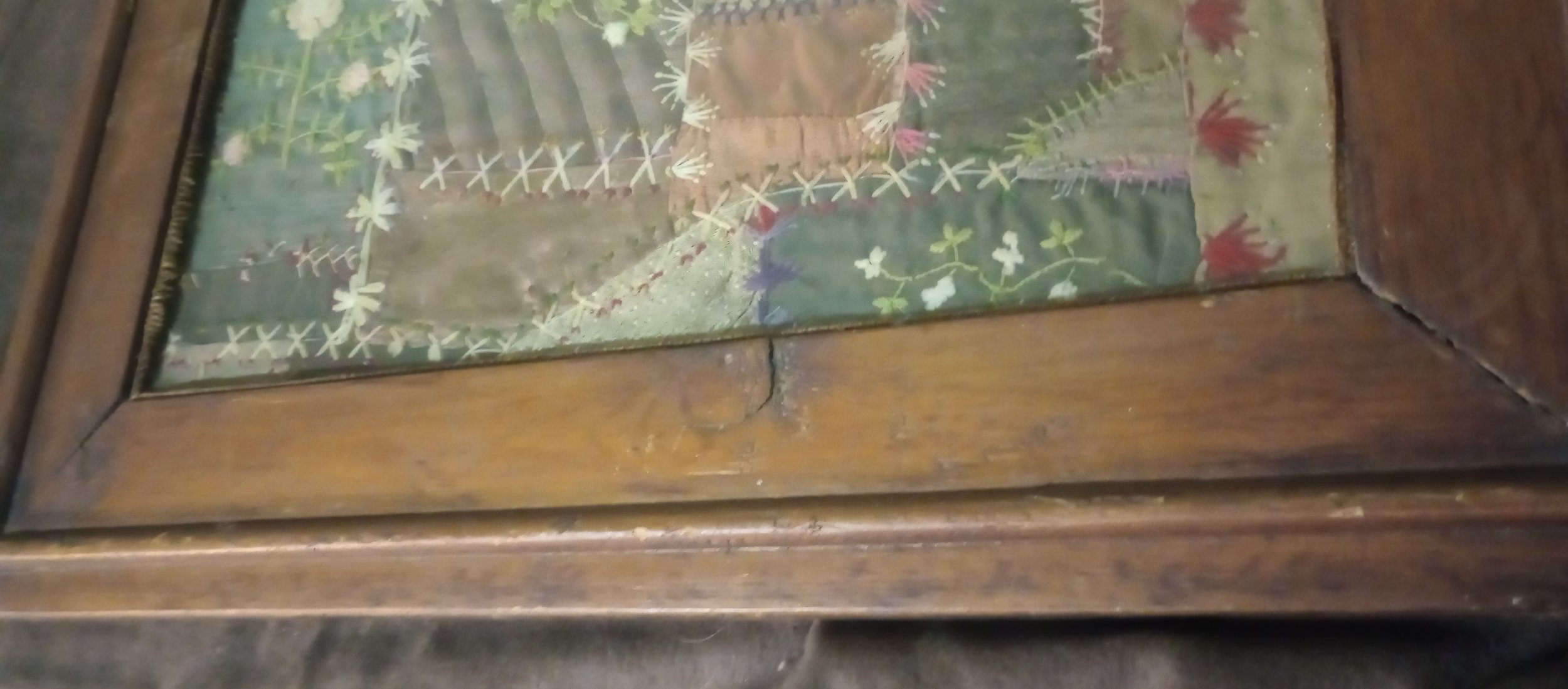 Image 14 of 17
 Image 15 of 17
 Image 16 of 17
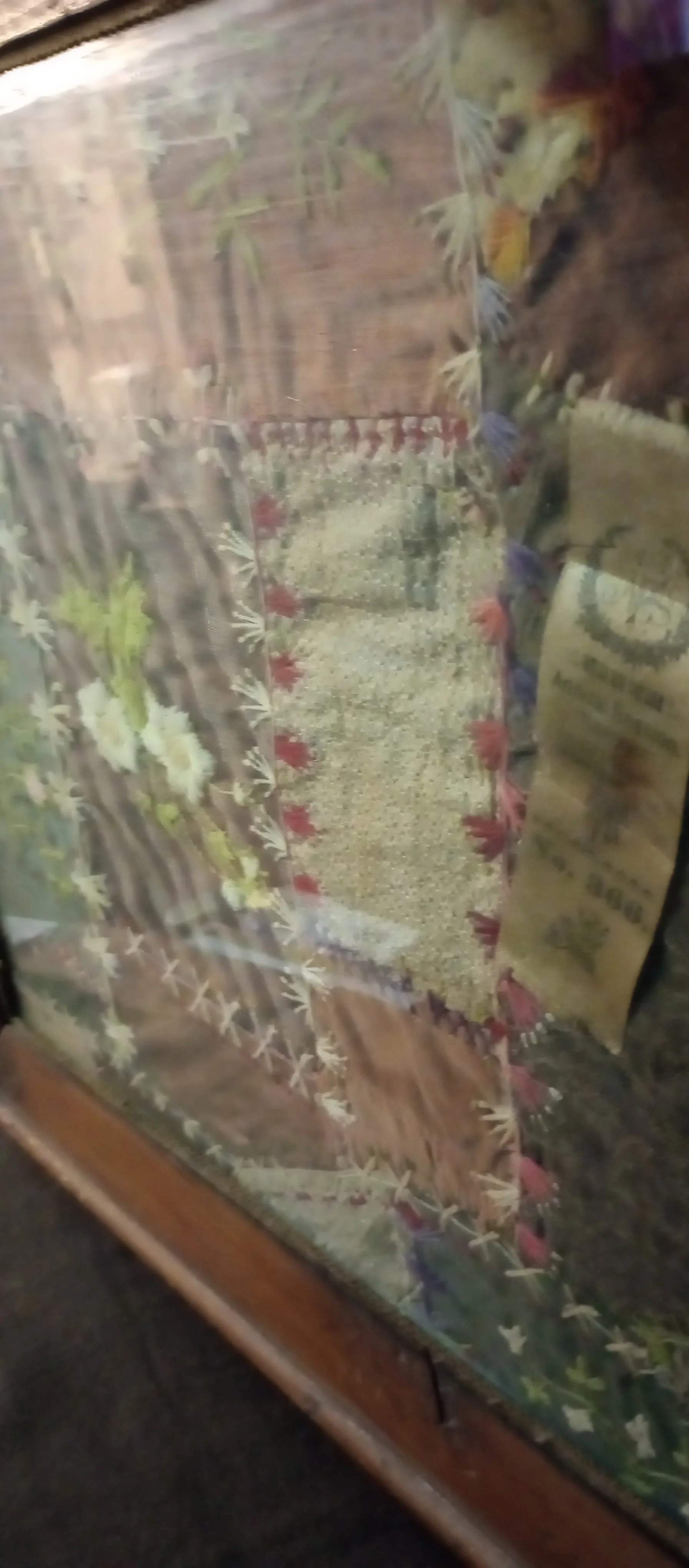 Image 17 of 17